Radon facts
What is radon, and why should Colorado homeowners care?
You can’t see it, smell it or taste it, and about half of the homes in this state have too much of it.
Radon in one paragraph
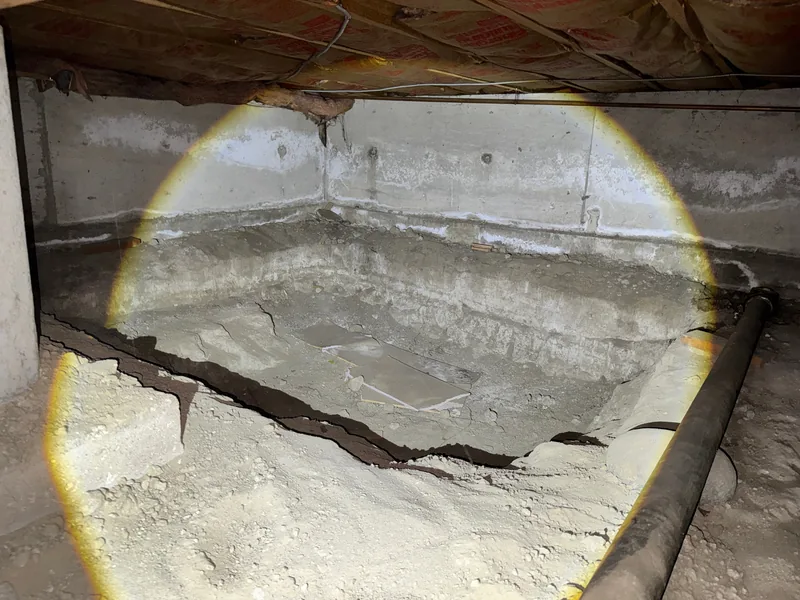
Radon is a radioactive gas. It forms naturally when uranium in soil and rock breaks down, seeps up through the ground, and gets into buildings through cracks, gaps around pipes, sump pits, crawl spaces and construction joints. Outdoors it disperses. Inside a closed house it can build up.
Why it matters
Breathing radon over years damages lung tissue. The U.S. Surgeon General lists radon as the second leading cause of lung cancer in the United States, after smoking, and the Colorado Department of Public Health and Environment (CDPHE) attributes more than 500 lung cancer deaths a year in Colorado to it.
Why Colorado has so much
Much of Colorado sits on uranium-bearing granite and soils, which is why the Front Range has some of the highest radon levels in the country. According to CDPHE, about half of Colorado homes have radon above the EPA’s action level of 4 picocuries per liter (pCi/L).
New homes aren’t immune. Tight, energy-efficient construction can hold radon in, and finished basements put living space right where levels are highest.
What the numbers mean
- 4 pCi/L or higher: the EPA recommends fixing the home.
- 2 to 4 pCi/L: the EPA recommends considering a fix. There is no known safe level.
The good news
Radon is easy to find and very fixable. A test takes a few days. A mitigation system, usually a pipe and a quiet fan that pull radon from under the house and vent it above the roof, typically takes half a day to install and can bring levels well under 4 pCi/L.
Sources: CDPHE, “State health officials recommend radon testing”; EPA, Health Risk of Radon; EPA, A Citizen’s Guide to Radon.